
Is Wool Fire Resistant? Sheep Wool vs Mineral Wool Fire Performance
Sheep wool is naturally flame-resistant, but it is not non-combustible. Compare wool and mineral wool fire performance, ignition temperature, smoke, and where each belongs.
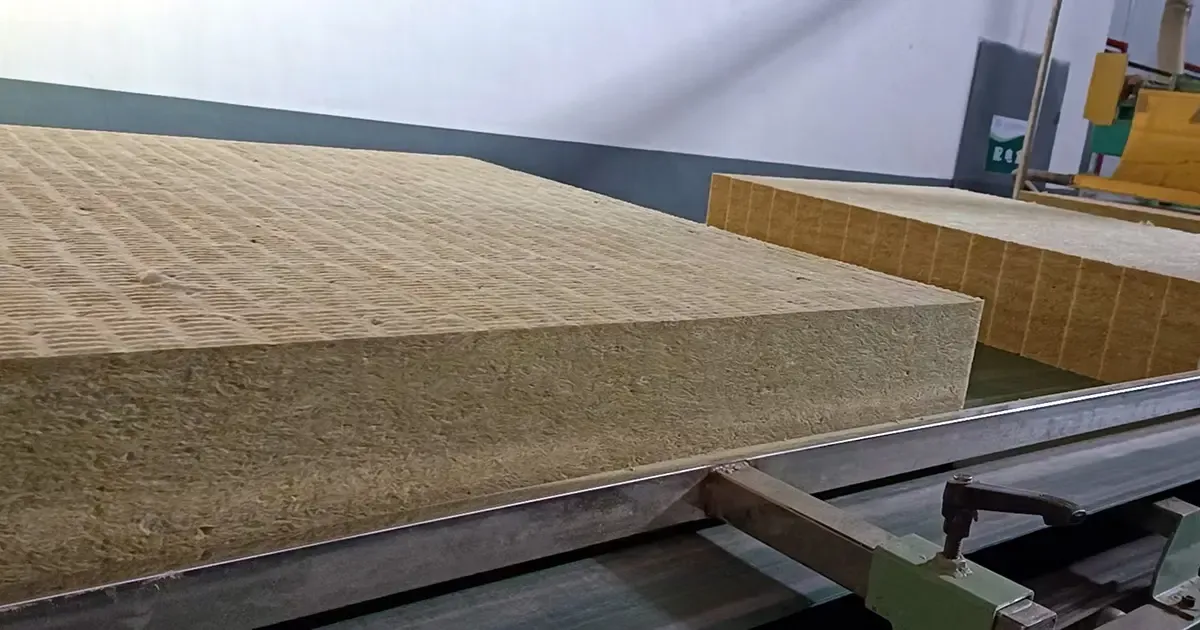
Search the term "wool fire resistant" and you will find two very different conversations. One is about sheep wool as a natural, breathable building insulation. The other is about mineral wool — rock wool and glass wool — used in industrial high-temperature insulation. They are both called "wool," but their fire behaviour is fundamentally different.
This article clarifies whether wool is fire resistant, how sheep wool compares with mineral wool, and why industrial heat applications must use mineral wool regardless of how well sheep wool performs in a home insulation test.
Is Sheep Wool Fire Resistant?
Yes — sheep wool is naturally flame resistant, but it is not non-combustible.
Sheep wool resists ignition because of its chemistry. Wool fibre is made of keratin, a protein with a high nitrogen content and significant internal moisture. When exposed to flame, wool does not melt or drip. Instead it chars, forming a protective carbonaceous layer that slows further burning. Once the flame source is removed, wool tends to self-extinguish.
Typical fire-related properties of sheep wool insulation:
| Property | Typical value | What it means |
|---|---|---|
| Ignition temperature | ~560–600 °C | Higher than many organic fibres; lower than mineral wool |
| Limiting oxygen index (LOI) | ~24–25 % | Needs a flame to keep burning; will self-extinguish when flame is removed |
| Melting / dripping | None | Chars instead; no molten drips that spread fire |
| Smoke | Moderate | More smoke than mineral wool, generally lower toxicity than synthetic foams |
| Fire classification (treated) | Euroclass B or C | Can reach "difficult to ignite" status with boron or other treatments |
Treated sheep wool insulation can meet building-code fire requirements for residential and light commercial use. That makes it a viable option for timber-frame walls, lofts, and breathable construction where the primary goal is thermal comfort rather than industrial fire safety.
How Mineral Wool Behaves in Fire
Mineral wool — rock wool and glass wool — is an inorganic fibre made from molten rock or glass. It is classified as A1 non-combustible under EN 13501-1, which means it does not burn, does not contribute fuel to a fire, and produces negligible smoke or heat release.
Key fire properties of mineral wool:
| Property | Rock wool | Glass wool |
|---|---|---|
| Fire classification | A1 non-combustible | A1 non-combustible |
| Service temperature | Up to ~650–750 °C | Up to ~300–350 °C |
| Melting point | >1000 °C | ~650–750 °C (softens above service temp) |
| Combustibility | None | None |
| Smoke in fire | Very low | Very low |
For our full fire-performance guide, see is glass wool fireproof. For temperature limits, see what temperature can rock wool withstand.
Side-by-Side Comparison
| Feature | Sheep wool | Mineral wool (rock wool) |
|---|---|---|
| Material origin | Natural organic protein fibre | Inorganic spun rock fibre |
| Burns in fire | Chars and can smoulder; self-extinguishes when flame removed | Does not burn |
| Euroclass rating | B/C with treatment | A1 |
| Maximum service temperature | ~80 °C long-term | ~650–750 °C |
| Industrial fire safety | Not suitable | Standard choice |
| Smoke production | Moderate | Very low |
| Typical use | Homes, timber frames, breathable lofts | Industrial pipe, vessel, furnace, and fire-rated insulation |
The difference is not about marketing. It is about chemistry. Sheep wool is an organic material that can be made fire-resistant through treatment. Mineral wool is inorganic and inherently non-combustible.
Why Industrial Heat Applications Must Use Mineral Wool
In industrial plants, the fire risk is different from a residential setting. Insulation is often installed near hot pipes, furnaces, exhausts, and process equipment where surface temperatures routinely exceed 100 °C and can reach several hundred degrees. In those conditions, sheep wool fails for three reasons.
1. Temperature ceiling
Sheep wool insulation is designed for building-service temperatures. Long-term exposure above ~80 °C degrades the fibre and any treatment. Rock wool is stable to ~650–750 °C and ceramic fibre to 1000 °C and above.
2. Fire classification
Most industrial fire-safety standards require A1 or A2 non-combustible insulation for high-temperature and fire-rated systems. Treated sheep wool at best reaches Euroclass B or C. That disqualifies it from process piping, fire barriers, and hazardous-area insulation.
3. Combustibility under sustained heat
Even flame-resistant organic materials can smoulder or char when exposed to sustained radiant heat or hot surfaces. Mineral wool does not. In a petrochemical or power-plant fire, the last thing the insulation layer should do is add fuel.
For marine, petrochemical, power, and furnace applications, mineral wool is not optional — it is a baseline safety requirement.
When Sheep Wool Makes Sense
Sheep wool insulation has legitimate advantages in the right place:
- Timber-frame and breathable construction — regulates moisture and avoids condensation risk.
- Lofts and pitched roofs — comfortable to handle, low irritancy, good acoustic absorption.
- Renovation projects — easy to cut and fit between studs and rafters.
- Sustainability-focused builds — renewable, low embodied carbon.
In these applications, sheep wool can meet the required fire performance with appropriate treatment and installation. The mistake is extending that performance claim into industrial high-temperature environments where only A1 mineral wool belongs.
Common Myths to Avoid
- Myth: "Wool insulation is fireproof." — Sheep wool is flame-resistant, not fireproof. Mineral wool is non-combustible.
- Myth: "Natural wool is safer than synthetic mineral wool in a fire." — Mineral wool produces far less smoke and no combustible gases.
- Myth: "If it passes a building fire test, it works in a factory." — Building tests and industrial fire curves are different. Industrial specs require A1 classification and verified service temperature.
Bottom Line
Sheep wool is naturally flame-resistant, will self-extinguish when the flame source is removed, and can be treated to meet residential fire codes. But it is organic and has a low service-temperature ceiling, so it cannot replace mineral wool in industrial heat applications.
For industrial pipe, equipment, furnace, and fire-rated insulation, mineral wool — rock wool, glass wool, or ceramic fibre — is the correct choice because it is A1 non-combustible, high-temperature stable, and produces minimal smoke.
At Rosewool we supply A1 non-combustible rock wool blanket, board, and pipe sections for industrial fire and thermal insulation. Contact our technical team for material selection based on your service temperature and fire-classification requirements.
For a deeper dive into forms, temperature ratings, and application guides, see our ceramic fiber insulation hub.
Frequently asked
Is sheep wool fire resistant? +
Yes. Sheep wool is naturally flame-resistant because keratin contains nitrogen and moisture. It chars rather than melts, and tends to self-extinguish when the flame source is removed. However, it is not non-combustible and has a low service-temperature ceiling.
Is wool insulation fireproof? +
No insulation made from sheep wool is fireproof. With treatment it can be flame-resistant and meet some building-code requirements, but it remains an organic material that can char and smoulder. Mineral wool is classified as A1 non-combustible, which is the level often described as fireproof in building standards.
What is the ignition temperature of wool? +
Sheep wool typically ignites at around 560–600 °C. By comparison, rock wool does not ignite because it is an inorganic fibre with a melting point above 1000 °C.
Why can't sheep wool be used for industrial insulation? +
Sheep wool is limited to roughly 80 °C long-term service temperature and at best reaches Euroclass B or C fire rating with treatment. Industrial high-temperature insulation must be A1 non-combustible and stable to several hundred degrees, which only mineral wool or ceramic fibre can provide.
Is mineral wool better than sheep wool in a fire? +
For fire safety in high-temperature and industrial applications, yes. Mineral wool is A1 non-combustible, produces very little smoke, does not burn, and can withstand 650–750 °C or more. Sheep wool is better suited to breathable building insulation where fire requirements are less severe.
Request a quote
Interested in our insulation solutions? Send us your requirements and our team responds within one business day.